Advertisement
If you’re planning a trip to Tuscany this fall of 2026 and want to go beyond the region’s Renaissance masterpieces, you’re in luck. From major international retrospectives in Florence to contemporary installations in smaller towns like Arezzo and Prato, this year’s exhibition calendar offers plenty of reasons to slow down and explore.
Below is a curated guide to the best exhibitions across Tuscany from end of September through early 2027, organized by city and season to help you easily plan your itinerary.
Florence: The Must-See Exhibitions of Autumn 2026
Broken. The Power of the Fragment (Palazzo Strozzi)
September 25 - January 24, 2027
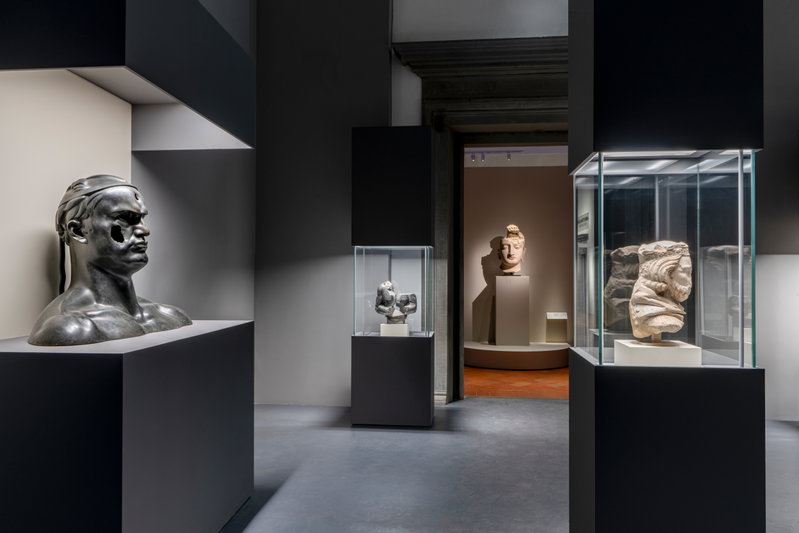
Palazzo Strozzi presents Broken: The Power of the Fragment, a major exhibition dedicated to the theme of the fragment in the history of sculpture, spanning from archaeology to contemporary art. Organized in collaboration with the National Gallery of Art in Washington, the exhibition brings together extraordinary and captivating works ranging from ancient Egypt to Michelangelo, and from Classical Greece to Rodin, extending to contemporary artists such as Louise Bourgeois, Francesco Vezzoli, and Danh Vo.
Featuring over eighty works and artifacts from the world’s most important museums - including the Metropolitan Museum in New York, the Louvre in Paris, the British Museum in London, and the Museo Nacional de Antropología in Mexico City - the exhibition explores the fragment from a fresh perspective: not merely as the remnant of a lost whole, but as an autonomous object capable of preserving traces of memory and transformation.
The exhibition invites visitors on a journey across diverse places and eras, from the ancient civilizations of Egypt, Etruria, and the Greco-Roman world to the pre-modern cultures of present-day Mexico, Mali, Peru, and Cambodia. Works by major masters of art history - including Giovanni Pisano, Michelangelo, and Auguste Rodin - are displayed alongside sculptures by contemporary artists such as Louise Bourgeois, Huma Bhabha, Robert Gober, Francesco Vezzoli, and Danh Vo, all of whom have adopted the fragment as a starting point for new expressive possibilities. Additionally, to mark the occasion, Palazzo Strozzi presents a new installation by Dutch-Belgian artist Mark Manders, created specifically for the Renaissance courtyard.
→ If you're planning your visit, don’t miss our guide to what's on in Florence in 2026. for more ideas on exhibitions, events, and seasonal highlights.
Pisa
Piero Macola. Paesaggi di vita (Palazzo Blu)
April 25 - November 8, 2026
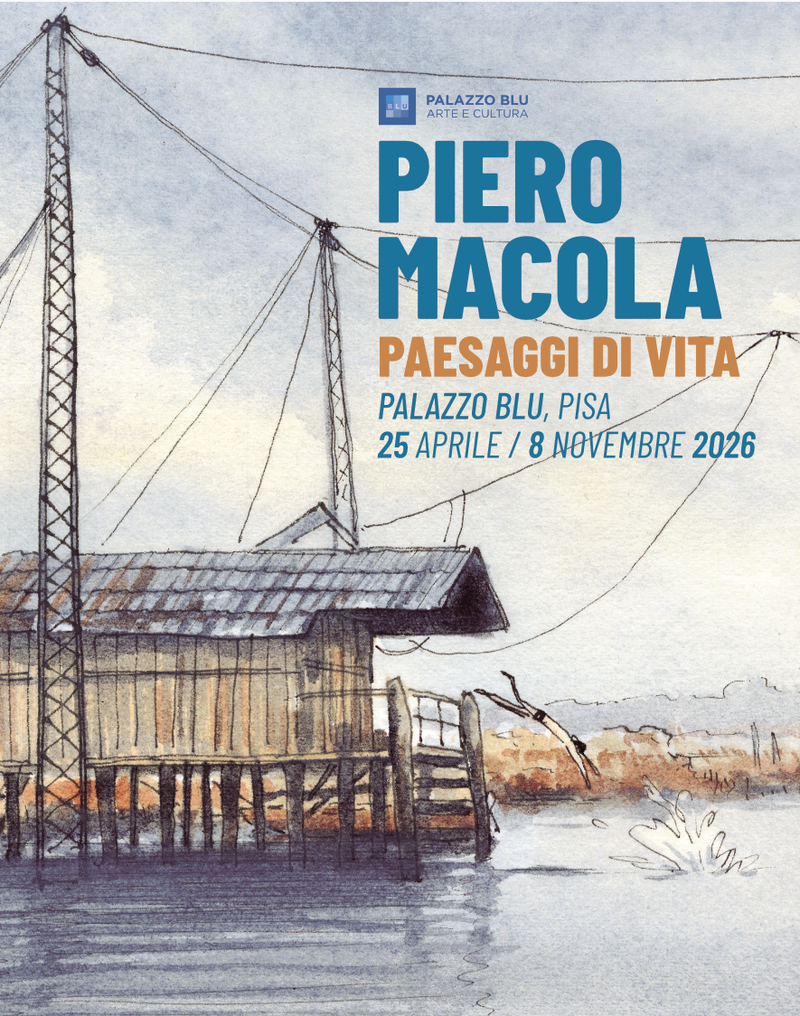
Curated by Giorgio Bacci, th exhibition is dedicated to graphic art, illustration, and comics focused on Piero Macola (Venice, 1976), one of the most authoritative voices in contemporary auteur comics.
Having trained at the Institut Saint-Luc in Brussels and working between Paris and Italy, Macola has built an international career; he has collaborated with the publisher Futuropolis since 2014 and published works in Italy with Oblomov and Coconino Press. Alongside his work in comics, he is an illustrator for publishers and periodicals such as Mondadori, Rizzoli, *Le Monde Diplomatique*, and *Internazionale*.
His visual language — born from a dialogue between documentation, direct experience, and imagination — explores themes such as memory, identity, and marginality, striking a balance between reality and fiction.
Through a rich selection of original artwork, sketches, and preparatory materials, the exhibition traces key works: *Le Tirailleur* (2014), dedicated to post-colonial memory; *Gli indesiderati* (2019), set along the Po River; *Lagune* (2023), a Venetian dystopia; and finally *La Vallée heureuse* (2026), presented as a world premiere while still in progress, offering visitors the rare opportunity to observe a work in the making. The exhibition concludes with a selection of illustrations created between 2015 and 2025.
Edward Hopper: New York and Beyond (Palazzo Blu)
From October 14 - March 7, 2027
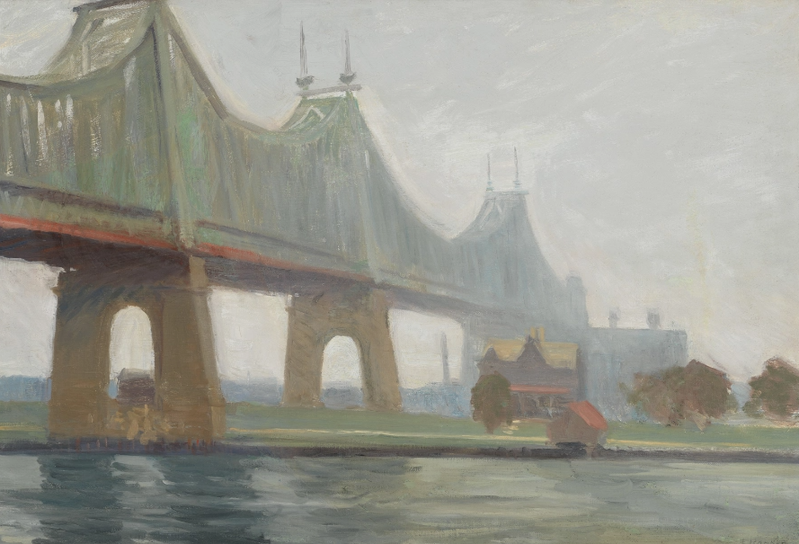
Starting soon, from October 14, Palazzo Blu presents Edward Hopper: New York and Beyond, curated by Barbara Haskell, Curator at the Whitney Museum of American Art, together with Caroline Webb, Curatorial Assistant at the Whitney Museum of American Art. Featuring more than 150 works, the exhibition is dedicated to one of the most influential American artists of the twentieth century and is organized into five thematic sections that trace the principal stages of Hopper’s life and artistic career.
For almost sixty years, New York was Edward Hopper’s home — the city that, more than any other, shaped his artistic vision and became the subject of many of his most celebrated works. Yet his imagination was also profoundly influenced by the places he encountered throughout his life: from the discovery of Paris to the coasts of New England, and the long journeys that took him across the United States.
Through paintings, watercolours, drawings, prints and archival materials, the exhibition retraces Hopper’s entire creative journey, highlighting the fundamental role that place played in shaping his artistic imagination. Cities, landscapes, architecture and human presence become the stages of a visual narrative that reveals how Hopper developed the distinctive and unmistakable vision that continues to captivate audiences all around the world. If you're in Pisa, we highly recommend you make a stop to visit this exhibition.
Prato
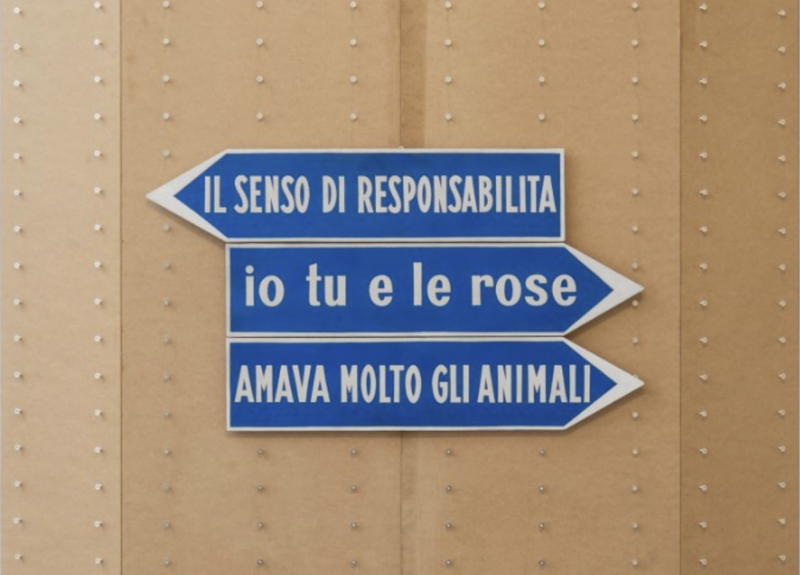
Rotte (Centro Pecci for Contemporary Art)
May 31- November 1, 2026
The exhibition traces the “routes” favored by the Prato-based collector Carlo Palli, selected from 180 works from his private collection, 380 works and documents from his personal Fluxus collection, and 230 works related to Visual Poetry and its surrounding practices, all generously donated to Centro Pecci to enrich and define the contemporary art heritage of his city.
The 150 works on display are dedicated to groundbreaking, unconventional, rule-breaking art, beginning with roots and references in twentieth-century art movements such as Futurism, Dada and Surrealism, Informalism, Pop Art, and Conceptual Art. The exhibition unfolds through a sequence of experimental artistic practices across the galleries: the poetic-visual revolution of Gruppo 70; bodies, icons, and actions embodying the Neo-Avant-Gardes; practices centered on creative processes and textual writing; painting and its developments and more recent variations; the interdisciplinary and playful attitude of Fluxus; objects reinterpreted by Nouveau Réalisme; and environments revisited by the Radical movement.
-- The Centro Pecci for Contemporary Art hosts rotating exhibitions throughout the year, check out our review and official website for more details as there are two other exhibitions currently there until the beginning of November, and then two more will begin a few weeks after.
If you're interested in textiles, pair your visit to Prato with a stop at the Museo del Tessuto or Textile Museum, which hosts interesting exhibitions related to the world of textiles, from materials to history of fashion.
Arezzo
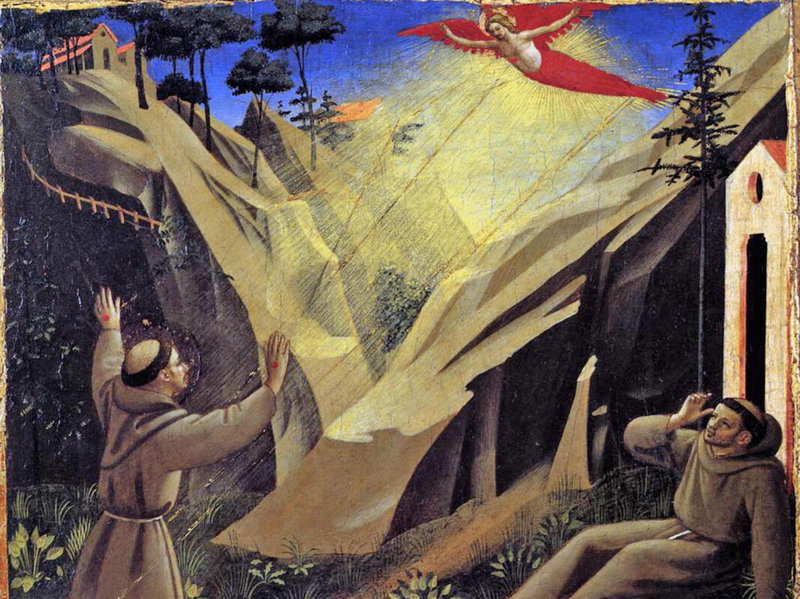
The Image of San Francesco - From the Middle Ages to the 20th Century (Gallery of Modern and Contemporary Art)
October 3 - January 10, 2027
Arezzo celebrates the eighth centenary of the death of Saint Francis (1181–1227) with "The Image of Francis – From the Middle Ages to the Twentieth Century," a major exhibition exploring the saint's iconography across the centuries. Curated by art historian Cristina Acidini — formerly Superintendent of the Florence Museum Complex — the exhibition is held at two venues: the Municipal Gallery of Modern and Contemporary Art (Piazza San Francesco 4) and the former Church of Sant’Ignazio (Via Carducci 7).
Arranged in a largely chronological sequence, the exhibition features over 70 works, including not only paintings but also sculptures, rare books, and illuminated manuscripts. The artists represent a wide range of masters: from Margarito d’Arezzo - who provides one of the earliest pictorial depictions of the saint - to Botticelli (with his gentle Saint Francis with Angels) and Carracci (with Saint Francis Adoring the Crucifix); the lineup also includes Andrea della Robbia, Giorgio Vasari, and Luca Giordano, as well as more recent figures such as Antonio Ciseri and Libero Andreotti.
Most of the works come from the local area, though there are loans from national and international museums - including the Uffizi, the Vatican Pinacoteca, the Met in New York, and the National Gallery in London - as well as from private collections.
Lucca
Turandot - Oh Divine Beauty! (Puccini Museum)
April 24 - November 1, 2026
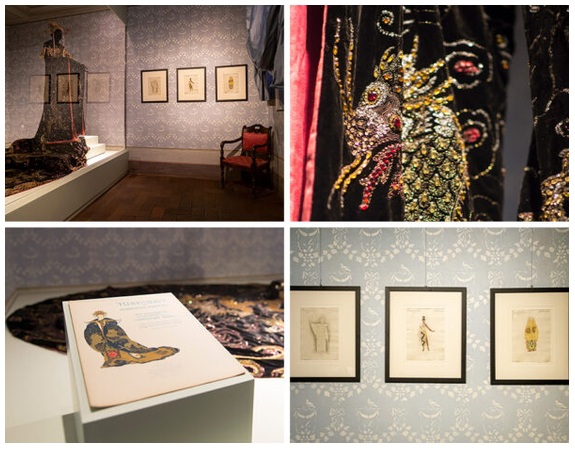
To mark the 100th anniversary of the premiere of Giacomo Puccini’s Turandot, the Puccini Museum – Casa Natale is enhancing its exhibition by dedicating several rooms to the opera.
Upon Puccini’s death on 29 November 1924, the opera Turandot remained unfinished. The task of composing the final section was entrusted to Franco Alfano, and the opera premiered at La Scala in Milan on 25 April 1926.
The exhibition is organised into two narrative sections: the first section recounts the world premiere in Milan. The narrative unfolds through period images of the production, stage photos of the performers, and reports from the opening night at La Scala 100 years ago.
The undisputed stars of this first part are the two exquisite Turandot costumes from Acts I and II of the premiere, rediscovered and restored a few years ago in the workshops of the Museo del Tessuto in Prato, which has since acquired them. The first section is completed by two original sketches by Galileo Chini, enhanced by original Art Nouveau frames, which illustrate scenes from Acts II and III in vivid colours, set against the period black-and-white photographs.
Puccini himself had chosen Galileo Chini to design the sets and Umberto Brunelleschi to create the costume designs, to whom the second part of the exhibition is dedicated. Brunelleschi’s designs were used to create the costumes for subsequent premieres in Italy and around the world, including the first performance in New York in 1926. What makes this exhibition unique is the opportunity to admire three exceptional historical costumes, precious one-off pieces, the work of two brilliant and eclectic artists.
Livorno
While Livorno doesn’t host as many large-scale temporary exhibitions, it remains an important cultural stop thanks to its strong artistic heritage.
The Museo Civico Giovanni Fattori regularly presents exhibitions connected to the Macchiaioli movement and local artists, making it a worthwhile visit if you’re exploring the Tuscan coast.
Siena
Living the Renaissance in Siena
May 22 - November 1, 2026
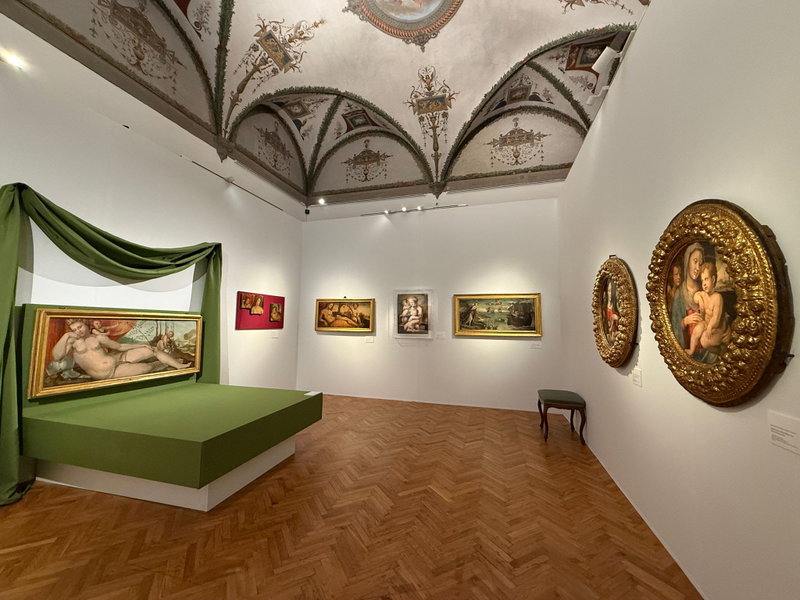
What if the Renaissance consisted not only of paintings and palaces, but also of bedrooms, decorated chests, and stories lived out day by day? The exhibition “Abitare il Rinascimento” (Living the Renaissance), hosted at the Palazzo delle Papesse, invites visitors to step literally into the lives of noble households during the 15th and 16th centuries, reconstructing the world of Sienese domestic art through more than eighty works.
Within the historic Renaissance residence that once belonged to Caterina Piccolomini—sister of Pope Pius II—a narrative unfolds that restores prominence to the furnishings and objects of aristocratic daily life, reflecting a visual culture that blended function, storytelling, and social representation.
As far as other exhibitions in Siena, the calendar tends to be more fluid, with shows announced closer to the season. Key venues like Santa Maria della Scala and Palazzo Pubblico regularly host temporary exhibitions, often tied to major cultural events.
-- If Siena is on your itinerary, it’s always worth checking current exhibitions just before your visit—you’ll often find unexpected gems.
Until November 15, the entire pavement of the Duomo di Siena is uncovered, for an extended period this year in dedication to San Francesco. It is a rare opportunity to check out all of the marbled scenes of the magnificent pavement.
Grosseto & the Maremma
In southern Tuscany, exhibitions are often tied to archaeology and landscape rather than large contemporary shows.
The Museo Archeologico e d’Arte della Maremma in Grosseto hosts occasional temporary exhibitions, while nearby archaeological parks like Roselle and Vetulonia offer a fascinating open-air experience that blends history with nature.
Final Thoughts
While Florence continues to dominate Tuscany’s exhibition scene, 2026 is a great year to explore beyond the usual highlights. Cities like Prato and Arezzo offer some of the most interesting contemporary shows, while Lucca and the Maremma provide more niche and unexpected experiences.
If you’re planning your itinerary, consider mixing one or two major exhibitions with smaller local discoveries—you’ll get a richer, more varied experience of Tuscany’s cultural landscape.
If you're also going to be in Florence, make sure to check out the current exhibitons in the city and surroundings. Also check out our blog for news on interesting events.
Don't stop here: check out local events including festivals, sagras and special holidays throughout Tuscany, a selection of those that are easy to find and fun to participate.
- what's happening in Florence
Photo credits: Palazzo Strozzi - Ela Bialkowska, OKNO Studio; press releases and official sites for the exhibitions.
LAST UPDATE: September 29, 2026
Advertisement
Photo Gallery



Comments
Questions? Ask them on our free Forum →